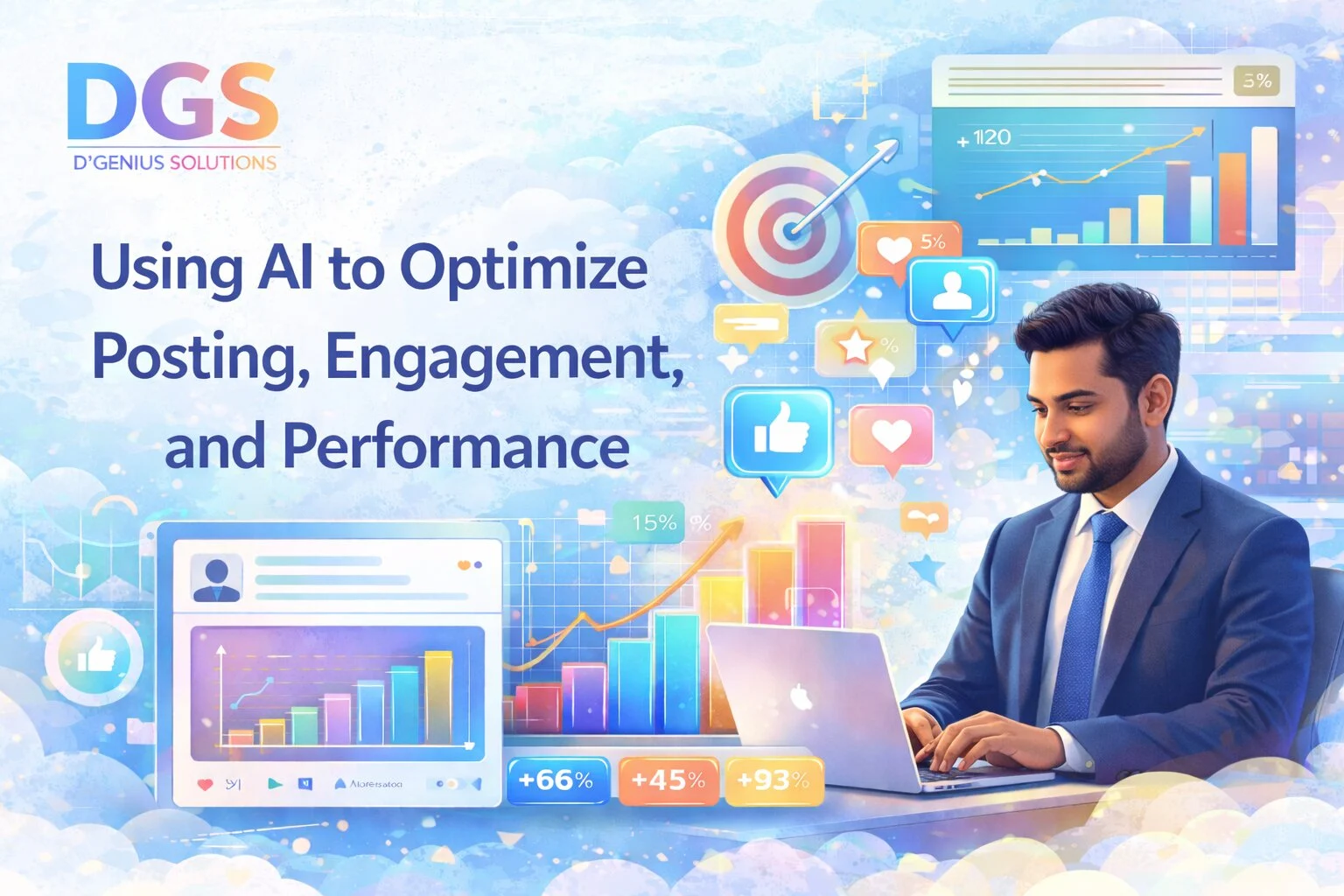
AI Content Optimization: 7 Proven Ways to Boost Results
In this article
- What Is AI Content Optimization?
- Why Posting Strategy Needs Smarter Support
- How Smart Content Planning Improves Engagement
- Better Performance Tracking With Clear Insights
- Balancing Automation With Human Creativity
- Scaling Content Without Losing Brand Voice
- What Businesses Should Keep in Mind
- Conclusion
- FAQs
- 1. What is AI content optimization?
- 2. How does it help social media?
- 3. Can smart content tools improve engagement?
- 4. Does automation make content less creative?
- 5. Why should businesses use smarter content planning?
Posting consistently, understanding what works, and keeping audiences engaged has become more difficult for brands. Platforms change quickly, audience behavior keeps shifting, and content teams can no longer depend only on guesswork.
This is where AI content optimization helps. It allows businesses to plan better, understand performance faster, and improve content without losing the human touch.
Instead of replacing creativity, smart tools support marketers with useful insights. They help teams decide what to post, when to post, and how to improve results across social media, blogs, ads, and digital campaigns.
What Is AI Content Optimization?
AI content optimization is the process of using smart technology to improve content planning, publishing, engagement, and performance tracking. It studies audience behavior, post timing, content formats, clicks, reach, and engagement patterns.
For brands, this means fewer random decisions and more structured content planning. Teams can understand what their audience prefers and create content that feels more relevant.
It is not about making content robotic. It is about using insights to support better ideas, sharper messaging, and stronger results.
Why Posting Strategy Needs Smarter Support
Manual posting often depends on trial and error. A team may publish regularly but still struggle to understand why some posts perform better than others.
With the right digital support, AI content optimization helps brands identify stronger posting times, better formats, and useful content themes. This helps reduce wasted effort and improves consistency.
For example, if short videos perform better on one platform while educational carousels work better on another, smart insights can help the team plan accordingly. This makes the content calendar more focused and easier to manage.
Businesses that want to improve their digital content workflow can also explore generative AI services to build smarter creative and marketing systems.
How Smart Content Planning Improves Engagement
Engagement is not only about likes or comments. It is about understanding what people connect with and why they respond.
Content intelligence systems can study patterns across captions, visuals, formats, and audience reactions. This helps marketers understand which topics create conversations, which formats hold attention, and which messages feel more relatable.
Many brands use these insights to refine captions, test content angles, and create posts that feel more useful to the audience. The result is content that looks natural but is backed by better planning.
For brands that want stronger platform growth, social media marketing services can help connect strategy, content, engagement, and performance more clearly.
Better Performance Tracking With Clear Insights
Performance reports can become confusing when there are too many numbers. Reach, impressions, clicks, saves, shares, comments, and leads all matter, but not every metric tells the same story.
AI content optimization helps simplify this data. It shows what should be repeated, what needs improvement, and what should be avoided.
Instead of chasing every trend, businesses can focus on content that supports real goals such as website traffic, enquiries, brand awareness, or lead generation. This makes reporting more meaningful and easier for teams to act on.
To understand how smart tools are changing agency workflows, readers can also explore this guide on AI tools for digital marketing agencies.
Balancing Automation With Human Creativity
One common concern is that automation may reduce creativity. In reality, it works best when used as a support system.
Smart tools can handle research, pattern analysis, and repetitive tasks. Humans still bring emotion, storytelling, brand voice, and original thinking.
At D'Genius Solutions, this balance matters. Technology supports the process, but strategy and creativity guide the final output. This keeps content personal, relevant, and performance-focused.
When used correctly, intelligent content planning does not remove authenticity. It helps teams create with more confidence.
Scaling Content Without Losing Brand Voice
As a brand grows, managing content across different platforms becomes harder. There may be blogs, reels, carousels, ads, emailers, and website content running at the same time.
Without a clear system, brand messaging can become inconsistent. AI content optimization helps teams maintain structure while still allowing creative flexibility.
This makes it easier to scale content operations, reduce delays, and keep every platform aligned with the same brand direction. Businesses can publish more consistently without compromising quality.
What Businesses Should Keep in Mind
Technology works best when there is a clear goal. Before using any tool, brands should know what they want to improve.
It could be better engagement, stronger reach, more leads, improved posting consistency, or clearer reporting. Once the goal is clear, the tool becomes more useful.
Brands should also review every output with human judgment. Google’s guidance on helpful, people-first content explains why useful content should be created for people first.
For social media learning and platform-based marketing practices, Meta Business learning resources are also helpful.
The best results come when data, creativity, and strategy work together.
Conclusion
AI content optimization is already helping businesses plan better content, improve engagement, track performance, and scale campaigns more efficiently.
It reduces guesswork, saves time, and gives teams clearer direction. But the human role remains important. Creativity, emotion, brand understanding, and strategy still decide how strong the final content feels.
When smart insights and human creativity work together, brands can create content that is consistent, useful, and built for better results.
FAQs
1. What is AI content optimization?
AI content optimization means using smart tools and data insights to improve content planning, posting, engagement, and performance tracking. It helps businesses create content that is more relevant and result-focused.
2. How does it help social media?
It helps social media teams understand the best posting times, stronger content formats, audience behavior, and engagement patterns. This makes planning more accurate and less dependent on guesswork.
3. Can smart content tools improve engagement?
Yes, they can improve engagement by showing which captions, visuals, topics, and formats connect better with the audience. This helps brands create content that feels more useful and relatable.
4. Does automation make content less creative?
No. These tools support research, analysis, and planning, while humans handle storytelling, emotions, brand voice, and creative direction.
5. Why should businesses use smarter content planning?
Businesses should use it because it saves time, improves consistency, reduces random posting, and helps teams make better decisions based on real content performance.
Accelerate Your Digital & Search Growth
Speak directly with our Mumbai-based SEO, AI search, and digital marketing strategists for a bespoke growth audit.
Get a Free Strategy AuditRelated Insights
AI Search Optimization for E-commerce Brands: 9 Proven Strategies for 2026 - D'Genius Solutions
AI Search Optimization for E-commerce Brands helps online stores appear in Google and AI recommendations. Discover 9 proven strategies for 2026.
Optimize Content for AI Search With 11 Proven Strategies
Optimize content for AI search with 11 proven strategies for ChatGPT, Gemini, Perplexity
11 Ways AI Video Production for Business Helps Create More Content Faster
Learn how AI video production for business helps brands create more content faster, reduce costs, improve marketing, and scale content creation across digital platforms.