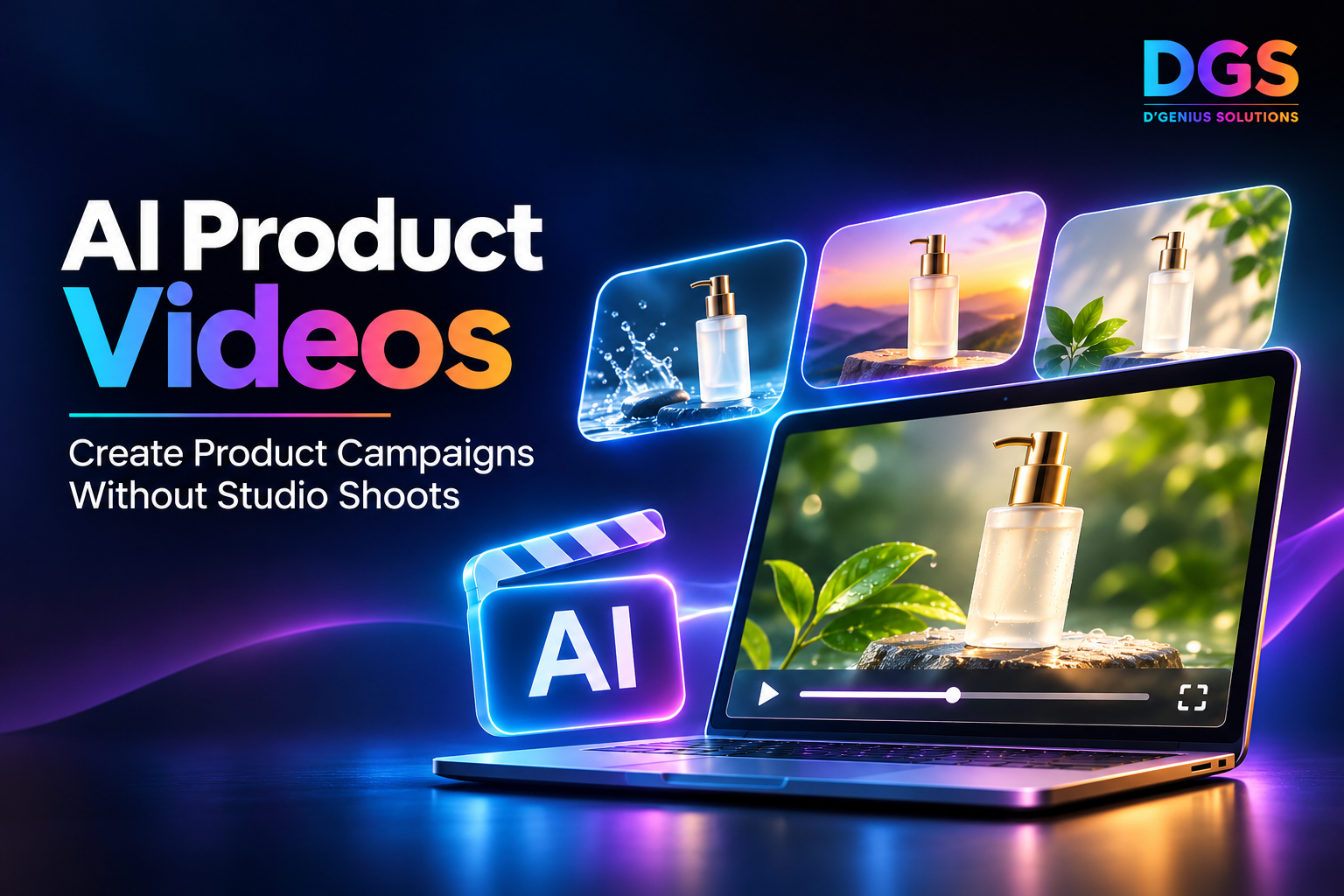
AI Product Videos: How Brands Can Create Product Campaigns Without Studio Shoots
In this article
- What Are AI Product Videos?
- Why Brands Are Exploring Studio-Free Product Campaigns
- How to Create an AI Product Campaign Without a Studio Shoot
- 1. Start With the Campaign Objective
- 2. Build a Reliable Product Reference Pack
- 3. Develop the Concept, Script and Shot List
- 4. Choose the Right Production Method
- 5. Create the Product World and Refine the Motion
- 6. Edit for Real Campaign Use
- AI Product Video Ideas That Work Well Without a Physical Set
- Cinematic Product Reveals
- Lifestyle-Inspired Product Stories
- Feature-Led Explainers
- Seasonal and Platform-Specific Variations
- What Brands Must Check Before Publishing an AI Product Video
- How to Measure Whether the Campaign Works
- When a Studio Shoot Is Still the Better Option
- Frequently Asked Questions
- Can a brand make a product video using only product photos?
- Do AI product videos always cost less than traditional shoots?
- Can AI-generated product videos be used in paid advertising?
- How can a brand keep the product consistent across multiple AI scenes?
- What types of brands benefit most from studio-free product videos?
- The Next Product Campaign Starts With a Better Brief
AI Product Videos: How Brands Can Create Product Campaigns Without Studio Shoots
A product campaign no longer has to begin with booking a studio, transporting inventory and coordinating a full shoot crew. With AI-assisted production, brands can turn approved product images, packaging artwork and a well-planned concept into video ads, launch films and social-first creatives. The opportunity is not simply to make videos faster. It is to explore more ideas while keeping the actual product, brand message and customer expectations at the centre.
Traditional shoots still matter, especially when a campaign depends on real people, physical demonstrations or precise material details. But for many digital-first product stories, AI video production offers a practical alternative to starting every visual from scratch on a set.
What Are AI Product Videos?
AI product videos are promotional videos created or enhanced through generative AI, computer-generated imagery, animation and conventional post-production. A brand may start with a photograph of a real item, use AI to create a background or camera movement, animate the product in a designed environment, and finish the video with editing, sound, graphics and a call to action.
The most important distinction is between an imaginative setting and an invented product. AI can help place a genuine skincare bottle in a cinematic water-inspired world; it should not silently change the bottle size, label, ingredients or performance claims. For that reason, the best workflows combine AI-generated scenes with verified brand assets and human review.
Why Brands Are Exploring Studio-Free Product Campaigns
A conventional production brings valuable control over lighting and physical action, but each new set, prop, location or talent requirement can increase coordination. AI-assisted creative allows a brand to develop several visual routes before deciding which should become a full campaign. It can also make short seasonal or platform-specific updates easier to plan.
Consider a beverage brand promoting the same bottle in a summer ad, a festive campaign and a marketplace video. Instead of recreating three physical environments, its team can use a consistent approved pack image and build distinct visual treatments around it. This flexibility is especially useful for launches, short-form advertising and rapid creative testing. It does not mean that every AI production will be cheaper or quicker: detailed revisions and accuracy checks still require time.
How to Create an AI Product Campaign Without a Studio Shoot
1. Start With the Campaign Objective
Decide what the video must accomplish before choosing a visual style. A product reveal might focus on recognition and curiosity. A conversion ad needs a clear benefit, offer and next step. An explainer should remove uncertainty by showing how the item fits into a customer’s life. The objective determines the script, video length, visual hierarchy and format.
For a 15-second launch film, a simple narrative could be: first three seconds, an attention-grabbing reveal; next five seconds, the product’s most important verified advantage; following four seconds, a memorable visual demonstration; final three seconds, the brand and call to action. This is a creative starting point, not a fixed formula.
2. Build a Reliable Product Reference Pack
Collect high-resolution images from multiple angles, packaging artwork, colour references, dimensions, brand fonts, logo files and approved product descriptions. Note which elements must never change: label spelling, cap shape, logo placement, ingredient text, texture, shade and product proportions. If available, 3D models or accurate CAD assets help with scenes that require precise rotation or close-up views.
Think of this reference pack as the single source of truth. It reduces the chance that an attractive generated scene accidentally depicts a different SKU.
3. Develop the Concept, Script and Shot List
A strong campaign begins with an idea, not a prompt. Choose one main message and translate it into individual shots: what appears on screen, what moves, which detail matters and what the viewer should feel. A storyboard also helps the team decide where realistic footage is essential and where abstract or imaginative imagery can do the work.
This is where consistent branding and visual identity become especially important. Lighting, typography, colour, camera pace and brand tone should feel related across every scene, even when each visual is generated separately.
4. Choose the Right Production Method
Not every shot should be generated in the same way. Reference-led image-to-video can add movement around approved product imagery. A 3D render can provide more control over rotations and packaging geometry. A hybrid approach can combine real pack shots with generated locations, particles, backgrounds or transitions. Selecting the method scene by scene usually produces a more believable result than expecting one tool to handle every requirement.
Reference images can guide video generation, but consistency is not automatic. Google’s video-generation documentation describes workflows that use product reference images to direct the output. Whatever tool is used, the final frames still need inspection.
5. Create the Product World and Refine the Motion
Design the environment around the product’s positioning. A premium watch may suit controlled reflections and minimal camera movement. A snack brand might benefit from bright colour, energy and playful motion. A wellness product may need a quieter, cleaner composition. Set consistent lighting, depth, motion speed and colour treatment before generating multiple shots.
Review each shot for common AI errors: distorted packaging, shifting logos, impossible reflections, extra objects, unnatural hand interactions and changes in product proportions. If accuracy cannot be maintained, replace the problem area with an approved pack shot, a 3D element or a simpler composition.
6. Edit for Real Campaign Use
Generated clips become a campaign only after thoughtful post-production. Edit to the platform’s viewing behaviour, keep benefits readable, add licensed sound, check voiceover pronunciation and export the correct aspect ratios. A 9:16 Reel, a 1:1 feed ad and a 16:9 website film may need different framing rather than one automatic crop.
A good content creation strategy also keeps the headline, caption, landing page and video promise aligned. A beautiful clip that communicates a different offer from the destination page can confuse potential buyers.
AI Product Video Ideas That Work Well Without a Physical Set
Cinematic Product Reveals
Use deliberate camera moves, dramatic lighting and a clean final pack shot to introduce a new product. This format suits beauty, jewellery, accessories, electronics and premium packaging, where appearance and detail drive attention.
Lifestyle-Inspired Product Stories
Place the product in a carefully art-directed context: a travel accessory against a mountain landscape, a home fragrance in a warm interior or a skincare item in a fresh, water-inspired setting. These scenes communicate mood and audience fit without requiring a physical location.
Feature-Led Explainers
Use motion graphics, annotations and accurate close-ups to communicate features that matter to the buyer. For technical products, use approved specifications and illustrations rather than allowing AI to invent internal components or functionality.
Seasonal and Platform-Specific Variations
A single concept can be adapted for a product launch, festive moment, promotional offer or retargeting creative. Through social media marketing, the team can plan variations for different audience segments while keeping the same product identity.
What Brands Must Check Before Publishing an AI Product Video
A studio-free shoot is not a quality-control-free shoot. Approve the product representation, not only the overall look. These checks should be built into the production process:
• Product and packaging accuracy: names, labels, colours, proportions and visible features match approved references.
• Claims and demonstrations: benefits, performance statements and visual effects do not imply results the product cannot deliver.
• Rights and permissions: source images, music, voices, likenesses and generated assets are cleared for the intended commercial use.
• Human review: close-ups, transitions, text, audio, accessibility and final output are checked before release.
Some categories, including health, financial products and cosmetics, require extra attention to claims and advertising standards. When audiences need to see actual performance, craftsmanship or human experience, real footage may remain the strongest choice. A hybrid campaign can use genuine footage for proof and AI visuals for atmosphere.
How to Measure Whether the Campaign Works
Judge an AI product video by its business role rather than the novelty of its production method. For awareness, review reach, qualified views and audience retention. For traffic campaigns, compare click-through rate and landing-page engagement. For sales or leads, measure conversion rate, acquisition cost and revenue where tracking allows it.
Creative testing should change one important element at a time: the opening hook, product angle, benefit or call to action. Keep the audience and offer comparable so that performance differences are easier to interpret. Connecting these assets with a performance marketing strategy helps the brand move beyond impressions toward informed campaign decisions.
When a Studio Shoot Is Still the Better Option
AI production is not a universal replacement for filming. A studio or location shoot may be essential when the product’s physical operation must be proven, fabric movement or skin texture must be shown faithfully, a real expert’s testimony is central, or customer trust depends on authentic human interaction. The question is not whether AI can generate an impressive scene. It is whether that scene is the most credible way to communicate the truth about the product.
For many brands, the strongest production model is selective: capture a small library of accurate product assets once, then use AI, CGI and editing to expand the creative possibilities around them. This approach keeps control of the product while reducing the need to rebuild every scene physically.
Frequently Asked Questions
Can a brand make a product video using only product photos?
Often, yes. Clear, high-quality product photos can support animated reveals, background changes and simple camera movement. Complex rotations, hand interactions and fine packaging details may require more reference angles, 3D assets or manual compositing.
Do AI product videos always cost less than traditional shoots?
Not always. They can reduce some location, crew and set costs, but creative direction, iterations, retouching, editing and accuracy controls still affect the budget. Savings depend on the complexity of the final deliverable.
Can AI-generated product videos be used in paid advertising?
Yes, subject to the rights attached to the tools and source assets, the platform’s rules and applicable advertising law. The video should not misrepresent the item or make unsubstantiated claims.
How can a brand keep the product consistent across multiple AI scenes?
Use an approved asset pack, product reference images, fixed brand guidelines and shot-by-shot quality review. When a generated product changes, compositing the original pack shot or using a controlled 3D model is often safer than repeatedly regenerating the scene.
What types of brands benefit most from studio-free product videos?
E-commerce, FMCG, beauty, lifestyle, accessories and other brands with frequent product launches or ongoing short-form campaigns can benefit from flexible creative production. Suitability depends on how important real-world demonstration and exact product fidelity are to the purchase decision.
The Next Product Campaign Starts With a Better Brief
AI expands the places a product can appear and the stories a brand can tell without rebuilding every scene on a physical set. But compelling visuals alone do not create a strong campaign. The foundation is still an accurate product, a clear customer message, a consistent brand world and a measurable objective.
D’Genius Solutions brings creative strategy, scripting, AI-led visuals and post-production together to help brands develop product videos for launches, social campaigns and digital advertising. Explore our AI product video production services to turn a product idea into campaign-ready content.
Accelerate Your Digital & Search Growth
Speak directly with our Mumbai-based SEO, AI search, and digital marketing strategists for a bespoke growth audit.
Get a Free Strategy AuditRelated Insights

AEO in 2026 How to Rank on ChatGPT and Perplexity - D'Genius Solutions
AEO in 2026 is becoming an important part of search marketing as people increasingly use ChatGPT, Perplexity and other AI-powered platforms to research companies.
Google Ads AI Max 2026 What Advertisers Need to Know Before the September Changes - D'Genius Solutions
Google Ads AI Max 2026 is changing how advertisers manage Search campaigns, targeting, advertising assets and landing pages.
7 Proven Tips to Hire an SEO Agency in Mumbai - D'Genius Solutions
Choosing the right SEO Company in Mumbai can directly affect your website visibility, lead generation and long-term digital growth. Here are 7 proven tips.