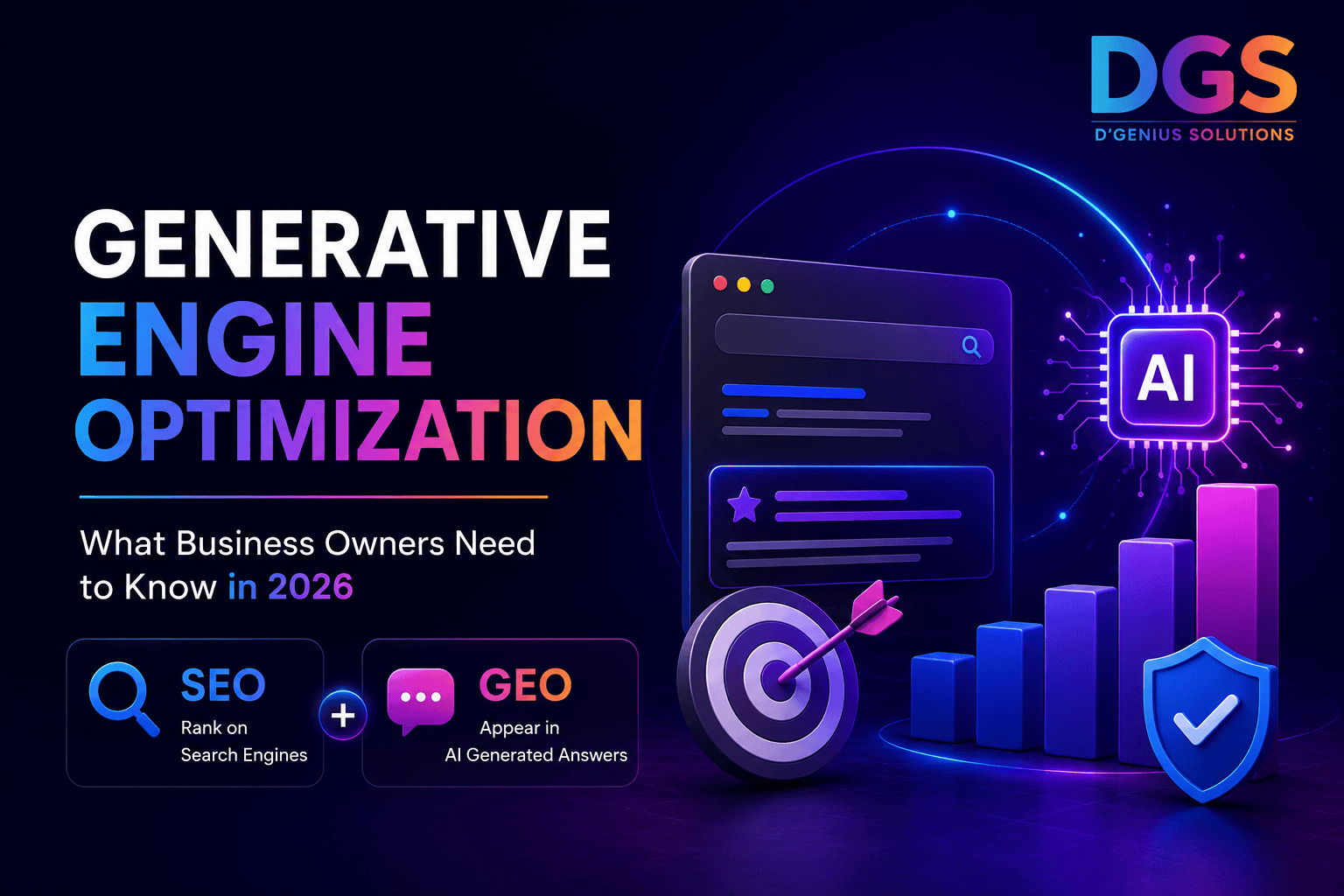
Generative Engine Optimization: What Business Owners Need to Know About GEO vs SEO in 2026
In this article
- What Is Generative Engine Optimization?
- What Is SEO?
- Generative Engine Optimization vs SEO: Main Difference
- Why Generative Engine Optimization Matters in 2026
- How SEO Supports Generative Engine Optimization
- How Generative Engine Optimization Supports Service Pages
- What Business Owners Should Change in 2026
- Common Mistakes in Generative Engine Optimization
- How to Build a Strong GEO and SEO Content Structure
- Quick Answer: Is Generative Engine Optimization Replacing SEO?
- Final Thoughts on Generative Engine Optimization
- FAQs
- What is Generative Engine Optimization?
- How is Generative Engine Optimization different from SEO?
- Is Generative Engine Optimization important in 2026?
- Does SEO still matter for AI search?
- Can Generative Engine Optimization help service pages rank?
- What type of content is best for Generative Engine Optimization?
Generative Engine Optimization is now becoming a serious part of digital marketing because the way people search is changing. Earlier, most customers searched on Google, clicked a few websites, compared options, and then made a decision. In 2026, many users also depend on AI Overviews, AI Mode, voice search, answer engines, and AI-powered tools to understand products, services, and brands faster.
This shift has created one important question for business owners: should they focus on SEO, GEO, or both?
The answer is both.
SEO helps your website rank in traditional search results. Generative Engine Optimization, also called GEO, helps your brand become easier for AI systems to understand, summarize, and mention in AI-generated answers.
For businesses, the goal is no longer only to appear on Google search results. The goal is to be visible wherever customers are searching, asking, comparing, and making decisions.
A strong strategy should connect SEO services for better Google visibility, GEO services for AI search visibility, and content that follows Google’s helpful content guidance.
What Is Generative Engine Optimization?
Generative Engine Optimization is the process of improving your website content, brand information, service pages, and digital presence so AI-powered search platforms can understand and present your business correctly.
In simple words, GEO helps your business become visible in AI-generated answers.
When a user asks an AI-powered search tool a question, the tool does not always show only a list of links. It may create a direct answer, compare businesses, summarize services, or suggest what the user should consider next.
If your website has clear, helpful, well-structured, and trusted content, it has a better chance of being understood by these systems.
Generative Engine Optimization focuses on clarity, authority, structured information, direct answers, FAQs, internal links, schema, and strong service page relevance.
What Is SEO?
SEO stands for Search Engine Optimization. It helps your website rank higher on search engines like Google for relevant keywords.
SEO focuses on improving your website so search engines can crawl, index, understand, and rank your pages.
A strong SEO strategy includes keyword research, on-page SEO, technical SEO, content optimization, internal linking, local SEO, backlinks, user experience, and regular content updates.
For example, if a business wants to rank for its service keywords, it needs a strong service page, supporting blogs, proper headings, optimized metadata, fast loading speed, and clear internal links.
This is why businesses still need a strong SEO service strategy even when AI search is growing.
SEO is not outdated. It is the base on which Generative Engine Optimization is built.
Generative Engine Optimization vs SEO: Main Difference
The main difference between Generative Engine Optimization and SEO is the way users receive information.
SEO focuses on ranking web pages in search results.
Generative Engine Optimization focuses on helping AI systems include your brand in generated answers.
SEO asks:
“How can this page rank on Google?”
GEO asks:
“How can this brand become a trusted source for AI-generated answers?”
SEO is more keyword-focused. GEO is more answer-focused.
SEO improves page ranking. GEO improves brand visibility in AI summaries, AI Overviews, and answer-based search platforms.
However, both depend on quality content, technical strength, topical relevance, authority, and trust. Businesses that treat SEO and GEO as one connected strategy will have a stronger chance of building long-term search visibility.
Why Generative Engine Optimization Matters in 2026
Generative Engine Optimization matters in 2026 because users are asking more detailed questions than before.
Instead of typing only short keywords, users now ask questions like:
“What is the best digital strategy for my business?”
“How can I improve visibility in AI search?”
“Which company provides SEO and GEO services?”
“What is the difference between SEO and Generative Engine Optimization?”
“How can my service page appear in AI-generated answers?”
AI-powered search experiences are built to answer these types of questions quickly. If your website does not explain your services clearly, AI systems may not understand your business properly.
That means businesses need content that is useful for people and easy for search engines and AI systems to read.
Business owners who already invest in digital marketing services for business growth should now also focus on how their content performs across Google Search, AI Overviews, and answer-based platforms.
How SEO Supports Generative Engine Optimization
SEO and Generative Engine Optimization are not separate enemies. SEO supports GEO.
Before AI systems can understand your business, your website must be crawlable, indexable, structured, and relevant. That is where SEO plays a major role.
SEO helps with:
Keyword relevance
Page structure
Meta title and description
Internal linking
Technical health
Website speed
Mobile experience
Content quality
Indexing
Topical authority
Service page ranking
If your website has weak SEO, poor structure, thin content, duplicate pages, or technical errors, it becomes harder for both Google and AI systems to understand your business.
That is why SEO should remain the foundation of every AI search visibility strategy.
How Generative Engine Optimization Supports Service Pages
A service page usually targets commercial keywords. A blog usually targets informational keywords. When both are connected properly, they support each other.
For example, a blog about Generative Engine Optimization can explain what GEO means, why it matters, and how it connects with SEO. Inside the blog, natural internal links can point users toward related service pages.
This helps users move from learning to action. It also helps search engines understand which service pages are important.
A well-planned GEO content strategy can support:
SEO service pages
GEO service pages
AEO service pages
Digital marketing pages
AI search visibility pages
Local service pages
Lead generation pages
For example, businesses preparing for AI-led search should explore GEO services for AI search visibility and AEO services for answer-based search visibility.
What Business Owners Should Change in 2026
Business owners should not create content only for search engines. They should create content that answers real questions clearly.
In 2026, a strong content strategy should include helpful blogs, strong service pages, FAQs, original insights, internal links, schema markup, updated information, and clear explanations.
Your website should clearly explain:
What your business does
Who your services are for
What problems you solve
Why your service matters
How your process works
What makes your approach useful
Which location or market you serve
What users should do next
This kind of clarity helps both SEO and Generative Engine Optimization.
Google’s SEO best practices for AI features in Search also show why strong content quality, technical accessibility, and useful page experience matter for AI-driven search visibility.
Common Mistakes in Generative Engine Optimization
Many businesses make the mistake of thinking GEO is only about adding AI-related keywords. That is not enough.
Generative Engine Optimization is not keyword stuffing. It is not copying AI-generated content. It is not publishing dozens of weak blogs. It is not adding random FAQs without real value.
Common mistakes include:
Writing generic content
Ignoring service page quality
Using copied or thin content
Not adding internal links
Ignoring schema markup
Not answering real user questions
Publishing blogs without a topic cluster
Not updating old pages
Ignoring technical SEO
Creating content only to manipulate rankings
Google’s spam policies for web search explain why low-value, manipulative, or scaled content can create ranking problems.
For business owners, the safer approach is simple. Create content that is useful, original, clear, and connected to real business goals.
How to Build a Strong GEO and SEO Content Structure
To make Generative Engine Optimization and SEO work together, your website needs a proper content structure.
Start with your main service pages. These pages should target commercial keywords and explain your services clearly.
Then create supporting blogs around important questions your audience is already asking.
For example:
A blog on Generative Engine Optimization can support a GEO service page.
A blog on SEO trends can support an SEO service page.
A blog on AI Overviews can support an AEO service page.
A blog on lead generation can support a digital marketing service page.
This structure builds topical authority.
It also helps search engines understand that your website is not publishing random content. Instead, every blog supports a larger business category.
This is where internal linking becomes very important. A blog should naturally connect readers to relevant pages such as SEO services, GEO services, AEO services, and digital marketing services.
Quick Answer: Is Generative Engine Optimization Replacing SEO?
No, Generative Engine Optimization is not replacing SEO. GEO is expanding SEO for the AI search era. SEO helps websites rank in traditional search results, while GEO helps businesses become visible in AI-generated answers. In 2026, businesses need both to improve Google rankings, AI visibility, and qualified lead generation.
Final Thoughts on Generative Engine Optimization
Generative Engine Optimization is no longer just a future concept. It is becoming an important part of how businesses build search visibility in 2026.
SEO helps your website rank. GEO helps AI systems understand and mention your brand. AEO helps your content answer direct questions. Together, they create a stronger search visibility strategy.
The businesses that win in 2026 will not depend only on old SEO methods. They will build helpful content, improve service pages, answer real questions, strengthen technical SEO, and structure their websites for both search engines and AI platforms.
Generative Engine Optimization and SEO work best when they are connected. When your blogs, service pages, FAQs, internal links, and schema support each other, your website has a better chance of ranking, being understood, and generating qualified leads.
FAQs
What is Generative Engine Optimization?
Generative Engine Optimization is the process of improving website content, service pages, and brand information so AI-powered search systems can understand, summarize, and mention a business in generated answers.
How is Generative Engine Optimization different from SEO?
SEO focuses on ranking pages in traditional search results. Generative Engine Optimization focuses on improving visibility in AI-generated answers, AI Overviews, answer engines, and generative search platforms.
Is Generative Engine Optimization important in 2026?
Yes, Generative Engine Optimization is important in 2026 because users are relying more on AI-powered search experiences to compare services, understand topics, and make decisions.
Does SEO still matter for AI search?
Yes, SEO still matters for AI search. A website needs strong technical SEO, useful content, proper indexing, and clear structure before AI systems can properly understand and reference it.
Can Generative Engine Optimization help service pages rank?
Yes. Generative Engine Optimization can support service pages by improving topical authority, adding clear answers, strengthening internal links, and making business information easier to understand.
What type of content is best for Generative Engine Optimization?
The best content for Generative Engine Optimization is clear, original, helpful, structured, and answer-focused. It should solve real user questions and connect naturally with relevant service pages.
Accelerate Your Digital & Search Growth
Speak directly with our Mumbai-based SEO, AI search, and digital marketing strategists for a bespoke growth audit.
Get a Free Strategy AuditRelated Insights
7 Ways Generative Engine Optimization Helps Your Business
Learn what Generative Engine Optimization is, how GEO improves AI search visibility, and how it helps businesses build authority and generate better leads.
AEO: 7 Powerful Reasons Businesses Need Answer Engine Optimization - D'Genius Solutions
AEO stands for Answer Engine Optimization. It is the process of improving website content so search engines, AI platforms, voice assistants, and answer
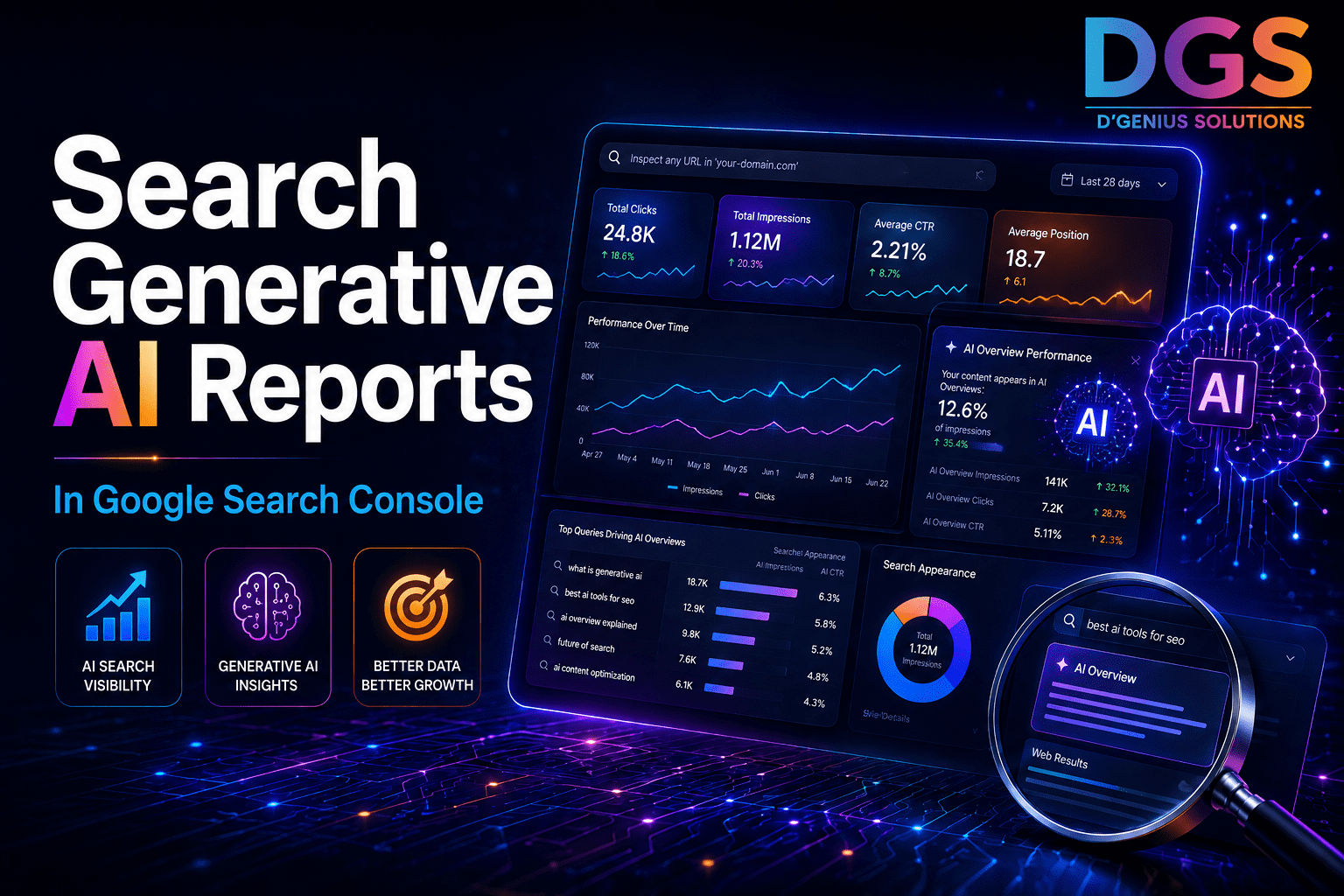
Google Launches Search Generative AI Performance Reports in Search Console: What It Means for SEO, GEO and AI Visibility - D'Genius Solutions
Google has introduced a major new update for website owners, SEO teams, publishers, and digital marketers: dedicated Search Generative AI performance reports