The Digital Lab

Unit 202, Amore Edge,
Swami Vivekanand Rd,
Khar West, Mumbai 400052

Start a Project
© 2026 D'Genius Solutions. All Rights Reserved.

AI-Generated Summaries in Search Ads: What This Means for Advertisers

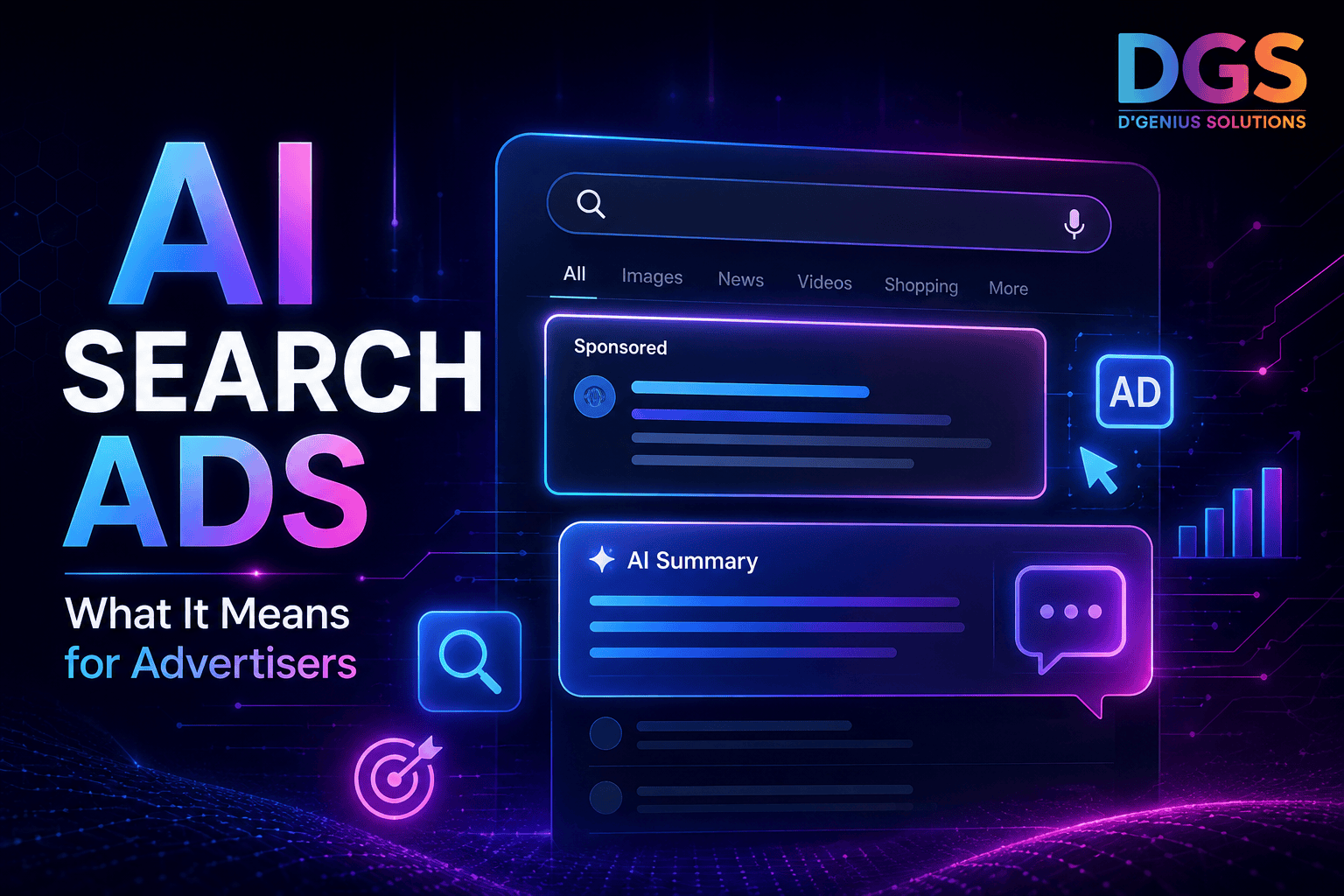
AI-generated summaries in search ads with AI search ads and Google Ads interface

Quick Answer

AI-generated summaries in search ads are short AI-created explanations that may appear below paid Google Ads. These summaries are created by Google’s AI to give users more context before they click on an ad. This can affect ad visibility, user trust, click-through rate, and landing page performance.

Introduction

Google Search is no longer only about blue links, ad headlines, and organic rankings. AI is slowly becoming part of every search experience. After AI Overviews changed the way organic results appear, Google is now testing AI-generated summaries in search ads.

This means a paid ad may show extra AI-written information below the normal ad copy. The advertiser may not write this summary directly, but Google’s AI may create it based on the ad, landing page, and search intent.

For businesses, this is a major signal. Google Ads, SEO, landing page content, and AI search readiness are now more connected than ever.

If your business wants stronger search visibility, improving your website with professional SEO services in Mumbai can help your pages become clearer for users, search engines, and AI systems.

AI-generated summaries in search ads with Google Ads and AI search interface
Google is testing AI-generated summaries in search ads, changing how paid ads may appear in search results.

What Are AI-Generated Summaries in Search Ads?

AI-generated summaries in search ads are extra pieces of text generated by Google’s AI and displayed near sponsored results. Their purpose is to help users understand what an ad or business offers before visiting the website.

These summaries may explain the service, product, offer, or page content in a simple way.

The important part is that the summary is not fully controlled by the advertiser. Google may generate it using available signals from the ad and landing page.

This makes landing page quality very important. If your page is unclear, outdated, or too generic, AI may not understand your offer correctly.

Why Google Is Testing This Feature

Google wants users to make quicker and better decisions on the search results page. With AI-generated summaries, users may get more context without reading the full landing page first.

This can be useful for users, but it also creates a new challenge for advertisers.

Advertisers usually control their paid search message through:

  • Ad headlines
  • Ad descriptions
  • Landing page copy
  • Extensions
  • Offers
  • Calls to action

But with AI-generated summaries in search ads, Google may add another layer of information. That layer can influence how users see the brand before they click.

For official details about Google Ads features and policies, you can refer to Google Ads Help.

7 Ways AI-Generated Summaries Can Affect Advertisers

1. Landing Pages Will Need Better Clarity

A landing page cannot be vague anymore. It should clearly explain what the business does, who the service is for, and why users should take action.

A strong landing page should include:

  • Clear service details
  • Simple benefit-focused content
  • Location relevance
  • Trust signals
  • FAQs
  • Case studies or proof
  • Strong call to action

If the page content is thin or confusing, Google’s AI may create a weak or incomplete summary.

2. Brand Messaging May Become Harder to Control

One of the biggest concerns with AI-generated summaries in search ads is brand control.

A business may write a polished ad, but the AI summary may explain the offer in a different way. Even a small mismatch can change how users understand the ad.

For example, if your ad promotes lead generation but your landing page talks mostly about branding, the summary may not match the user’s search intent.

This is why every page should have consistent messaging across:

  • Ads
  • Website pages
  • Blog content
  • FAQs
  • Google Business Profile
  • Social profiles
  • Backlink articles

Strong consistency helps Google understand the brand better.

3. PPC and SEO Will Become More Connected

Paid ads and SEO were once treated as separate channels. That is changing.

With AI-generated summaries in search ads, the quality of your website content may influence how Google understands your paid campaigns.

This means PPC success may depend not only on bidding and keywords, but also on page quality, content structure, trust signals, and SEO strength.

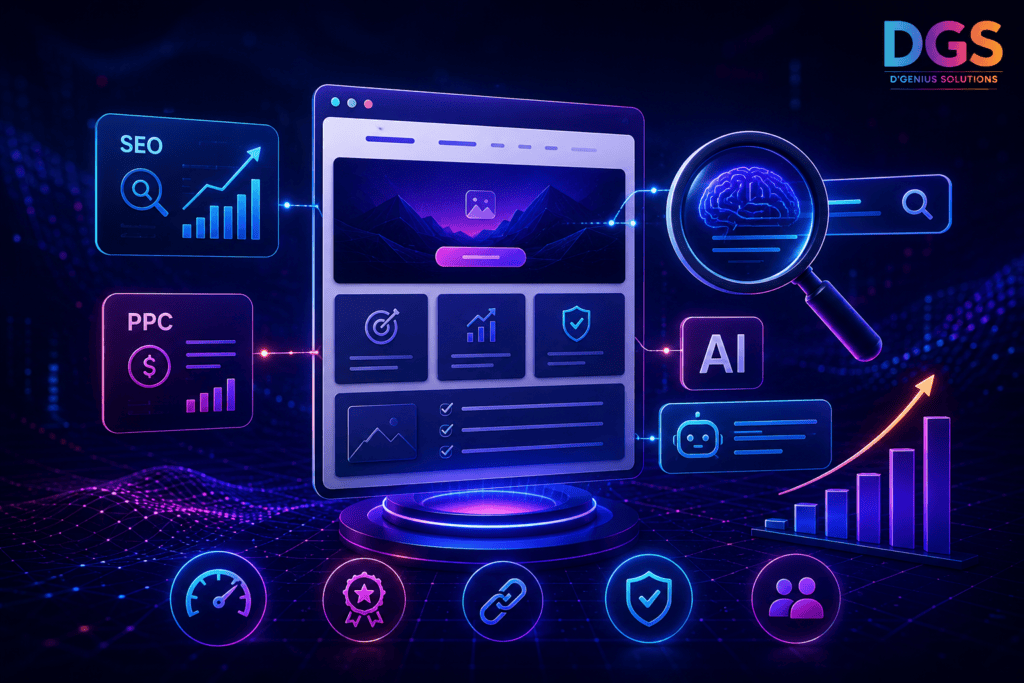
AI-ready landing page with SEO, PPC, and AI search optimization elements
A visual showing how strong landing pages, SEO, PPC, and AI search signals work together for better visibility.

A business running ads should also invest in:

  • On-page SEO
  • Technical SEO
  • AEO content
  • GEO optimization
  • Schema markup
  • Internal linking
  • Landing page improvement

For a stronger full-funnel search strategy, businesses can also explore DGS digital marketing services to improve both paid and organic visibility.

4. Click-Through Rate Can Change

AI summaries may affect CTR in two different ways.

If the summary is helpful, users may understand the offer faster and click with stronger intent. This can improve lead quality.

But if the summary gives enough information on the search page, some users may not click. This can reduce traffic for some campaigns.

Advertisers should monitor:

  • CTR
  • CPC
  • Conversion rate
  • Cost per lead
  • Bounce rate
  • Form fills
  • Phone calls
  • Search term quality

The real impact will depend on how Google expands this feature.

5. Accuracy Will Become More Important

AI-generated content can sometimes be incomplete or incorrect. That is why businesses need to keep their website information accurate.

Your landing page should not contain outdated offers, unclear pricing statements, wrong locations, or unsupported claims.

Important details to review include:

  • Service names
  • Business locations
  • Contact details
  • Offers
  • Industry claims
  • Case studies
  • Testimonials
  • FAQs
  • Policy information

Accurate content reduces confusion and helps AI systems understand your business properly.

6. FAQs Can Help AI Understand User Intent

FAQs are useful for both users and AI systems. They answer direct questions and make the page easier to understand.

A good FAQ section should answer practical questions like:

  • What does this service include?
  • Who needs this service?
  • How does the process work?
  • How long does it take?
  • What makes this company different?
  • How can users get started?

FAQs also support AEO, voice search, AI Overviews, and LLM-based search results.

7. AI Search Readiness Is Now Necessary

The test of AI-generated summaries in search ads shows that AI search is not limited to organic results.

Businesses need to make their websites easy for AI to read, understand, and summarize.

This includes:

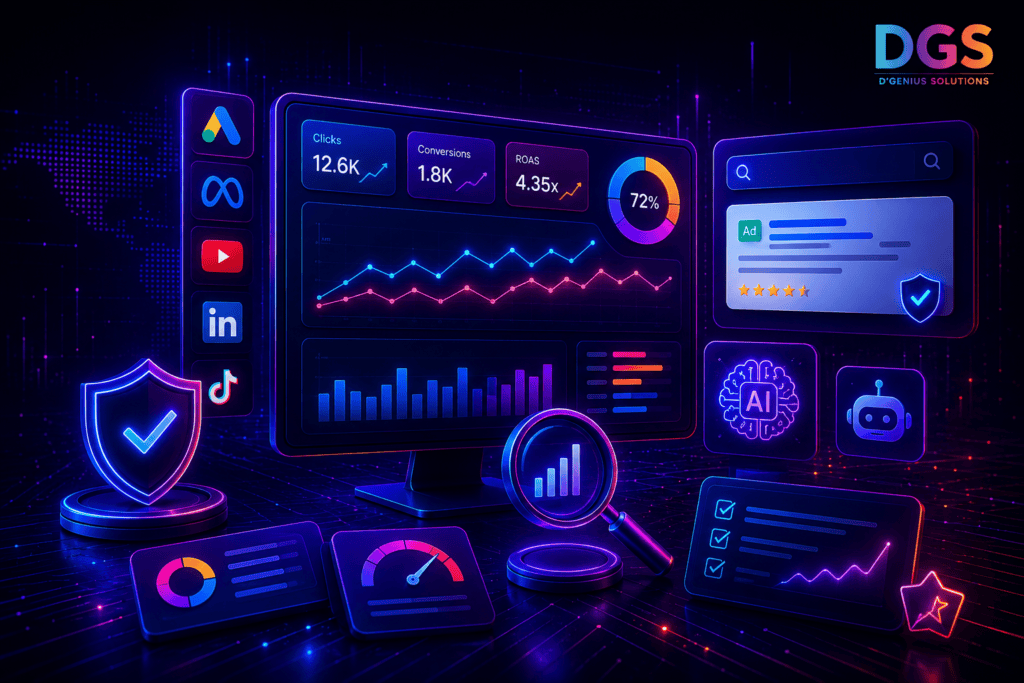
AI search visibility and Google Ads performance dashboard for digital marketing campaigns
A futuristic dashboard showing ad performance, AI search visibility, campaign tracking, and digital marketing growth signals.
  • Clear headings
  • Short paragraphs
  • Helpful explanations
  • Strong internal links
  • Updated business details
  • Schema markup
  • Real trust signals
  • Reviews and proof
  • Simple navigation
  • Mobile-friendly pages

A website that is clear for users is also easier for AI systems to understand.

How Businesses Should Prepare

Businesses should not panic, but they should prepare early.

Start with your landing pages. Make sure every important service page clearly explains the offer, process, benefits, location, and next step.

Then review your paid ads. Your ad copy should match the landing page message. Avoid overpromising or using vague lines that do not explain the real service.

Also improve internal linking. Link your blogs, service pages, and location pages together in a natural way. This helps users and search engines move through your website easily.

Finally, add proof. Reviews, case studies, client results, awards, and business details help build trust.

What This Means for SEO and AI Visibility

This update shows that Google is moving toward an AI-supported search experience across both paid and organic results.

That means SEO is no longer only about keywords. Businesses now need content that is:

  • Helpful
  • Accurate
  • Easy to understand
  • Structured well
  • Trustworthy
  • Relevant to search intent
  • Useful for both humans and AI

Google’s core update direction has always been clear: content should be made for people first. Pages that are written only to manipulate rankings may not perform well in the long run.

So instead of keyword stuffing, businesses should focus on helpful answers, clear page structure, real expertise, and genuine value.

Final Thoughts

AI-generated summaries in search ads may become an important part of Google Ads in the future. Even though this feature is still being tested, it gives advertisers a clear warning: AI is changing how users see paid search results.

The businesses that prepare early will have an advantage.

Strong landing pages, clear service content, structured FAQs, accurate business details, and better SEO foundations can help Google understand your brand more effectively.

In the coming years, search success will not depend only on who bids higher or who ranks first. It will depend on which brands are clear, helpful, trusted, and ready for AI-driven search.

FAQs

1. What are AI-generated summaries in search ads?

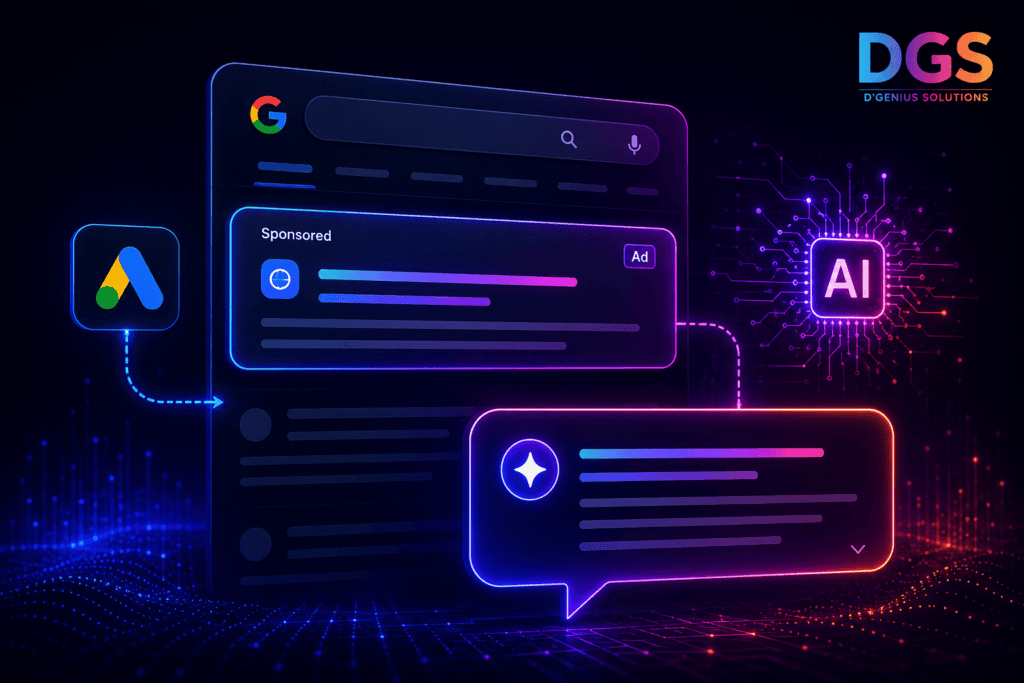
AI-generated summaries in search ads are short explanations created by Google’s AI and shown near paid ads. They help users understand the ad before clicking.

2. Why are AI-generated summaries in search ads important?

They are important because they can affect how users understand paid ads, how often they click, and how much control advertisers have over their message.

3. Can advertisers edit AI-generated summaries in search ads?

At this stage, advertisers may not have full control over these summaries. The best step is to keep ad copy and landing page content clear, accurate, and consistent.

4. Can AI-generated summaries affect Google Ads performance?

Yes. They may improve qualified clicks if the summary is helpful, but they may also reduce clicks if users get enough information directly on the results page.

5. How should businesses prepare for AI-generated summaries in search ads?
Businesses should improve landing pages, add FAQs, align ad copy with website content, strengthen SEO, use internal links, and keep all business information updated.